
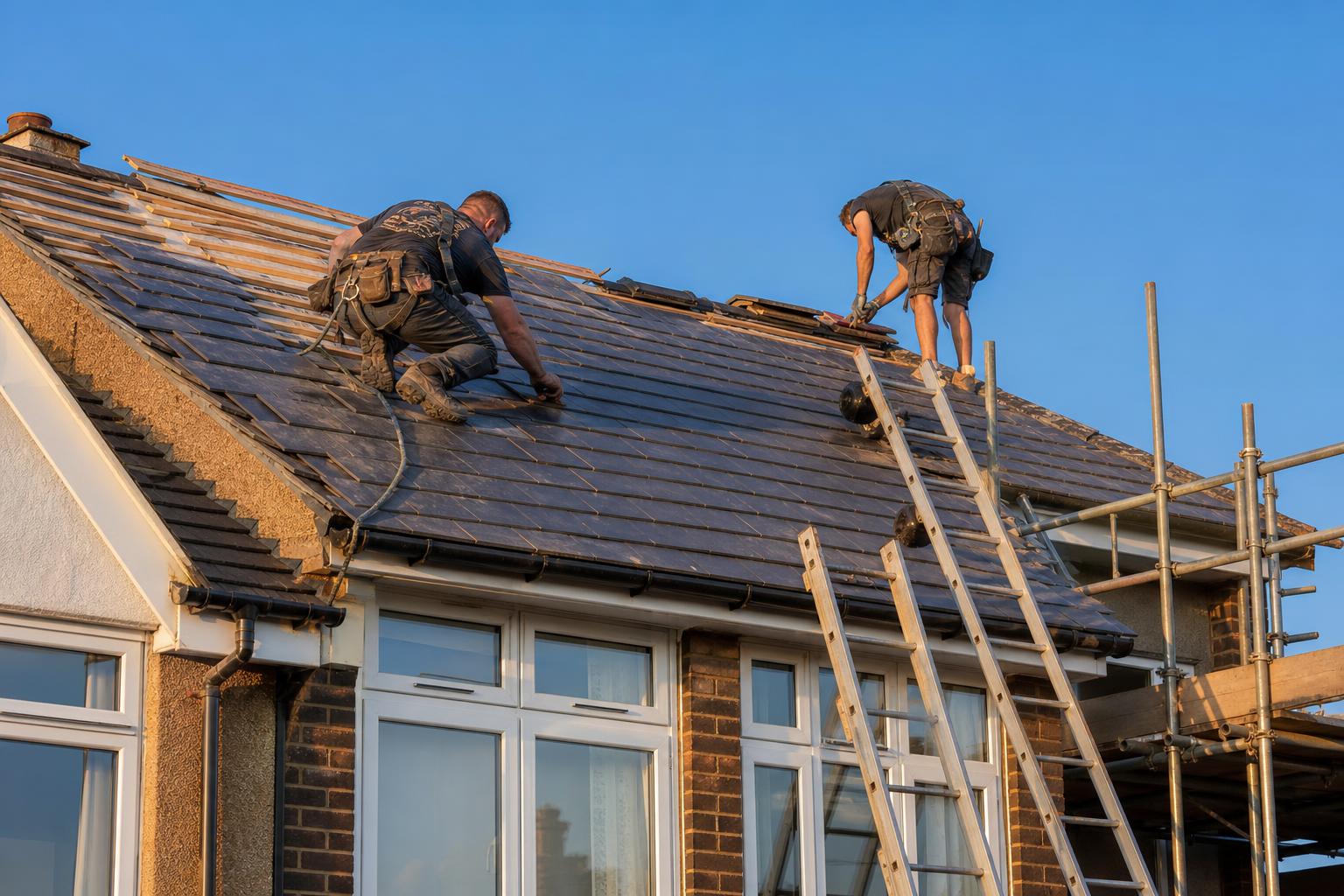
Most UK home insurance policies have similar wording about storm damage. Understanding the wording — and how loss adjusters interpret it — makes the difference between a successful claim and a frustrating one. None of this is legal advice, but it's what we see week-in, week-out as the roofer who has to write the reports.
What "storm damage" actually means to an insurer
Standard policy wording requires three things, often in combination:
1. A storm event — usually defined as winds of 55mph or above, or torrential rain, or heavy snow. The Met Office records the wind speed at the nearest weather station; if it was a calm day, you don't have a storm claim regardless of what happened to your roof. 2. Damage that is the direct result of that storm. Pre-existing wear that simply became visible after the storm typically doesn't qualify. 3. Damage that is sudden, not gradual. A leak that's been getting worse for months isn't a storm claim even if the latest rainfall finally made it appear inside.
The grey area is huge, and that's where claims get won or lost.
Things that are usually covered
- Tiles or slates physically dislodged by a recorded storm event
- Chimney stack damage from a recorded storm (lightning, lifted pots, brick damage)
- Flat roof felt torn or lifted by storm-force gusts
- Trees or branches falling onto the roof in the storm
- Internal damage (ceilings, decor, electrical) caused by water ingress from any of the above
Things that are usually NOT covered
- Slate nail sickness causing slates to slip during a storm (the storm is the trigger, not the cause)
- Worn-out flat roof felt that finally failed in heavy rain
- Blocked gutters causing damp to internal walls
- Failed lead flashings that have been weathering for 30 years
- Moss damage or general wear-and-tear
The crucial nuance: internal damage often is covered even when the roof isn't
This is the one most homeowners miss. If your old slate roof slips a tile in a storm and water comes through, the insurer may decline to pay for the roof repair (arguing it was worn out) but will often pay for the internal damage — the stained ceiling, the ruined carpet, the redecoration. It's worth claiming for the internal work either way and accepting that the roof repair itself might be your own cost.
What we provide for claims
A proper roofer's report for an insurance claim includes:
- Photographs of the external damage, taken from the roof
- Photographs of the internal damage and water track
- A written diagnosis distinguishing storm damage from pre-existing wear
- A clear written quotation for the work, itemised by element
- A copy of any Met Office storm event data if relevant
We provide this as standard for any storm-related callout. We don't inflate the damage to chase a bigger claim — that's both dishonest and a quick way to be deselected from the insurer's approved-contractor lists. But we do document everything honestly, and a properly written report by a qualified roofer is significantly harder for a loss adjuster to dismiss than a one-line "needs new roof" estimate.
When to claim and when not to
- Damage over £500 with a clear storm cause: usually worth claiming
- Damage under £250: probably not worth the excess and the claims-history hit
- Damage with mixed cause (storm + wear): claim the internal damage, pay for the roof yourself
- Recurring leaks that finally got bad after a storm: the storm isn't your friend here; the insurer will read the wear-and-tear angle and decline
If you're unsure, call us before you call the insurer — we can usually tell you in five minutes whether a claim is realistic, which saves a wasted excess and a needless mark on your claims history.