
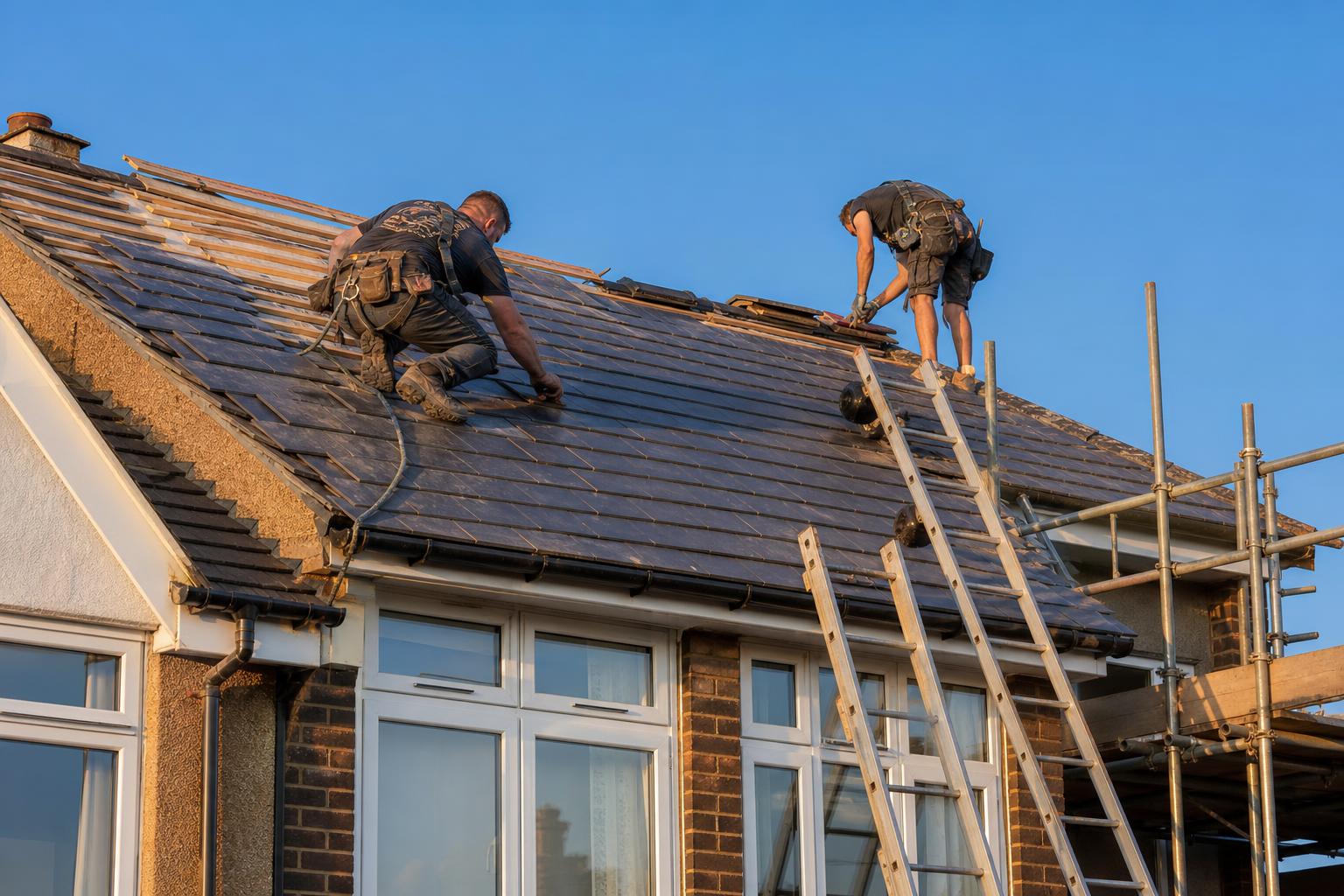
1930s Semi-Detached Roofing in Cleveleys
Inter-war brick semi — bay window, clay or early concrete tile, hipped or gabled roof.
1930s Semi-Detached roofs in Cleveleys
Standard 1930s 3-bed brick semi found across Marton, Stanley Park, Fulwood, Penwortham, Cleveleys inland and Padiham fringe estates. Original roof is often clay plain tile or first-generation concrete tile, both now 80+ years old.
Typical roof construction: Clay plain tile or early concrete interlocking tile on a hipped roof, often with a small bay-window roof at the front.
Cleveleys context: Heavy mix of 1930s–1960s semis and bungalows with concrete interlocking tile roofs, plus newer estates inland. Bungalows often have shallow-pitch roofs that gather more debris. Direct Irish Sea exposure on the western fringe — wind uplift on ridges and chimney pointing failure are common after winter storms.
What fails on a 1930s Semi-Detached in Cleveleys
- Ridge tiles lifting in coastal/Pennine winds because original mortar bedding has carbonated
- Bay-window flat-lead roofs at the front cracking after 80 years of UV cycling
- Hip-tile slippage on the angled hips — gravity plus old mortar = a recurring storm callout
- Inadequate loft ventilation causing winter condensation under the felt
Typical job
Most calls are ridge re-bedding + bay-window lead replacement, or full re-roof with dry-fix ridges and modern breathable underlay.
Full re-roof on a 1930s semi typically £5,500–£9,000 with concrete tile, £7,500–£12,000 with clay or matched plain tile.