
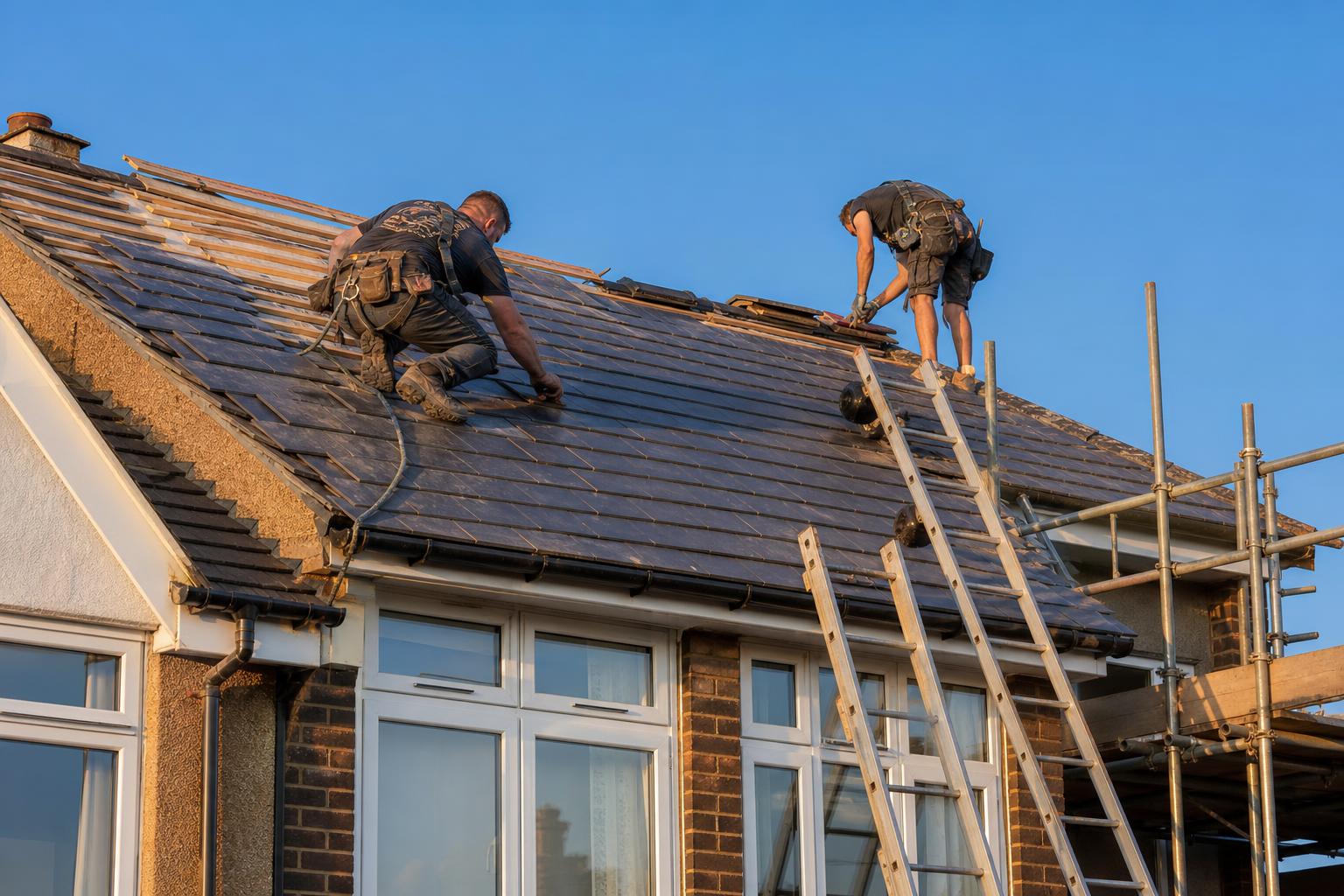
1930s Semi-Detached Roofing in Accrington
Inter-war brick semi — bay window, clay or early concrete tile, hipped or gabled roof.
1930s Semi-Detached roofs in Accrington
Standard 1930s 3-bed brick semi found across Marton, Stanley Park, Fulwood, Penwortham, Cleveleys inland and Padiham fringe estates. Original roof is often clay plain tile or first-generation concrete tile, both now 80+ years old.
Typical roof construction: Clay plain tile or early concrete interlocking tile on a hipped roof, often with a small bay-window roof at the front.
Accrington context: Dense rows of 'Accrington Nori' brick terraces with original Welsh slate roofs, plus mid-century estates around Huncoat and Baxenden. Many former mill buildings now converted or in commercial use. Sheltered compared to the coast, but real elevation in Baxenden and Huncoat brings heavy wind-driven rain in autumn and winter.
What fails on a 1930s Semi-Detached in Accrington
- Ridge tiles lifting in coastal/Pennine winds because original mortar bedding has carbonated
- Bay-window flat-lead roofs at the front cracking after 80 years of UV cycling
- Hip-tile slippage on the angled hips — gravity plus old mortar = a recurring storm callout
- Inadequate loft ventilation causing winter condensation under the felt
Typical job
Most calls are ridge re-bedding + bay-window lead replacement, or full re-roof with dry-fix ridges and modern breathable underlay.
Full re-roof on a 1930s semi typically £5,500–£9,000 with concrete tile, £7,500–£12,000 with clay or matched plain tile.